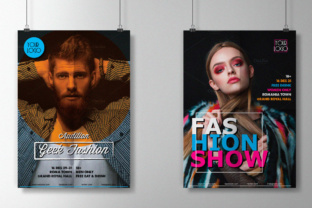
Fashion Show Flyers for Men and Women
A fashion show flyer is often the first tangible impression an event makes. It can be a minimalist postcard handed out on a busy street, a glossy insert in a magazine, or a digital image shared across social feeds. When a show features collections for both men and women, the flyer carries the added responsibility of communicating a cohesive vision while appealing to a diverse audience. Whether you are a designer launching a dual-gender line, a boutique owner coordinating a local event, or a marketing professional managing a high-stakes production, your relationship with this flyer will vary dramatically based on your priorities.
Instead of offering a generic one-size-fits-all guide, this article breaks down how different audiences approach the same task. By understanding the unique pressures and goals of each role, you can better identify what matters most for your own project.
The Flyer as a Creative Statement vs. A Practical Tool
For a new designer, a fashion show flyer is a piece of the portfolio. It must feel like an extension of the craft. The choice of paper stock, the kerning of the typeface, and the mood of the photography all serve a single purpose: translating the collection's aesthetic into a physical object. If the show blends structured menswear silhouettes with fluid womenswear pieces, the flyer must mirror that duality without feeling disjointed.
For a small business owner, the flyer is a conversion engine. It must answer four questions clearly: what, when, where, and why should I care? There is less room for abstract artistry and more demand for legible information. A salon owner hosting a style launch for men and women might prioritize a bold headline and a discount code over creative photography. The same tool is being used to achieve completely different outcomes.
The Independent Designer or Creator
If you are launching your first collection that features both menswear and womenswear, your flyer is a calling card. You are likely handling the design yourself or working closely with a graphic artist. Your focus will be on creative expression and learning value. You want the flyer to teach people who you are as a brand. A practical example might be using a diptych layout: one side showing a tailored coat, the other a draped dress, with the event details placed at the intersection. You might spend hours adjusting margins because that attention to detail reflects the care you put into your garments.
- Priority: Quality and aesthetic alignment.
- Challenge: Balancing two distinct design languages (men's and women's) into one unified piece.
- Long-term value: The flyer becomes part of your press kit and portfolio.
The Local Boutique or Small Business Owner
Running a store that carries streetwear or casual apparel for both men and women means your event is likely rooted in community. Your flyer needs to work fast. You might be using a platform like Canva or a simple template from a local print shop. Cost and speed are your driving factors. You cannot afford a week-long design process. A practical example is designing a flyer that features real customers or local influencers rather than professional models. This builds relatability. You might also print the flyer on one side only to keep production costs low, then use the back for a simple store map or a discount coupon.
- Priority: Ease of use, low cost, quick turnaround.
- Challenge: Creating a professional look without a large budget or design team.
- Practical tip: Use a QR code that leads directly to a simple ticketing or RSVP page. Test it before printing hundreds of copies.
The Corporate Event Organizer or Professional Marketer
When you are producing a large-scale fashion show for a charity, a trade association, or a major brand, the flyer takes on a different weight. It must satisfy sponsors, attract VIP guests, and function within a broader marketing ecosystem. Your priority is reliability and presentation. The flyer must be flawless. Any inconsistency in color, a misspelled sponsor name, or a broken QR code can damage credibility. You will likely work with a professional print vendor and request proofs. For a show featuring men and women, you may produce multiple versions of the same flyer: a sleek, high-end version for mailing to VIPs and a more informational version for general distribution.
- Priority: Professional finish, accuracy, integration with digital campaigns.
- Challenge: Managing approval from multiple stakeholders (sponsors, board members, designers).
- Practical tip: Create a "Save the Date" postcard first, followed by a detailed flyer closer to the event date. This builds anticipation and allows you to update logistics.
The Freelance Designer or Consultant
If you are hired to create promotional materials for a fashion show, flexibility and speed define your success. Your client may be showing men's, women's, and gender-neutral collections all in one evening. You need to design a system that works across formats: a square version for Instagram, a vertical version for flyers, and a horizontal version for email headers. Your focus is on creating a modular layout. A strong, bold typographic treatment for the event title can tie the whole campaign together, while photography can be swapped easily. Your value lies in your ability to deliver consistent visuals across every touchpoint without reinventing the wheel for each format.
- Priority: Versatility, brand consistency, efficient output.
- Challenge: Adapting one design to multiple platforms without losing impact.
- What to evaluate: Does the template allow for easy updates for future seasons?
The Educator, Blogger, or Fashion Student
For someone studying fashion marketing or graphic design, a flyer is a case study. You might be analyzing why a particular flyer for a men's and women's show succeeded or failed. Your priority is learning value and critical thinking. You ask questions like: Does the color palette appeal equally to a male and female audience? Does the layout reflect a unisex brand identity, or does it feel like two separate flyers forced together? As a blogger, you might compare flyers from different seasons to track how a brand's visual identity evolved. This analytical approach helps you develop a keener eye for effective design.
- Priority: Understanding design principles, audience psychology, and brand strategy.
- Challenge: Separating personal taste from objective effectiveness.
- Long-term usefulness: These analytical skills apply to all forms of visual communication.
Key Considerations for Your Own Fashion Show Flyer
Before you start designing, ask yourself what you are trying to build. If your goal is brand credibility, invest in premium printing and professional photography. If your goal is ticket sales, prioritize clarity, urgency, and a direct call to action. If your goal is community engagement, design a flyer that people want to share or post on their refrigerator.
- Blending aesthetics: For a show featuring both men and women, avoid creating a visual divide. Use a consistent color palette and typography system that feels unified.
- Information hierarchy: The name of the event, the date, and the venue are the most critical pieces. Make them impossible to miss.
- Imagery: If you use models, consider showing a diverse group that reflects the audience you want to attract. A single image of a man and a woman can instantly communicate the scope of the show.
- Material quality: A heavy cardstock with a matte finish signals luxury. A digital flyer needs to be compressed enough to load fast but sharp enough to zoom in on details.
Finding the Right Approach for Your Skill Level
Beginners should focus on clarity and simplicity. Use templates as a starting point and customize the colors and fonts. Do not overcrowd the layout. Experienced users can experiment with asymmetry, layering, and print finishes like foil stamping or embossing to create a tactile experience. Professionals should focus on systemization—creating a campaign that works across print and digital seamlessly.
Regardless of your role, the best fashion show flyer is the one that respects the viewer's time while honoring the creativity of the event. It bridges the gap between the runway and the real world, inviting people to witness something special. When designed with intention, a simple piece of paper can capture the energy of a live show and extend its reach far beyond the venue.