What Is Engranajes Family? A Practical Guide
If you have ever tried to pick a gear system for a project, a classroom demonstration, or a small production run, you know that one size rarely fits all. Engranajes Family is a concept—and often a product line—built around modular, interchangeable gear components designed to serve multiple uses. Instead of forcing you into a single standard, Engranajes Family offers a set of compatible parts that can be reconfigured for different tasks. Whether you are a hobbyist tinkering in a garage or a procurement manager looking for cost-effective mechanical solutions, understanding what this family approach offers can save you time, money, and frustration.
Understanding Engranajes Family: More Than Just Gears
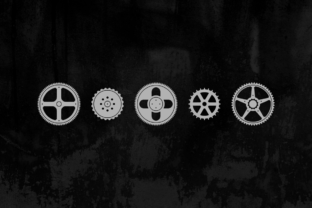
At its core, Engranajes Family refers to a coordinated range of gear types—spur, helical, bevel, worm, and planetary sets—that share common mounting dimensions, module sizes, and material options. The idea is simple: you buy into an ecosystem, not a single part. Need more torque? Swap in a different gear ratio using the same housing. Working on a prototype? Use the same base components as the final product. This interoperability makes Engranajes Family attractive across many fields.
The family concept also extends to accessories like shafts, bearings, and fasteners that are designed to work together without custom machining. For someone who values speed and consistency, this reduces design iterations. For a budget-conscious buyer, it minimizes inventory because one set of gears can serve multiple machines.
Why Different People Care About Engranajes Family
Not everyone looks at a gear family the same way. A student might care about understanding how gear ratios affect speed and torque. A freelance designer might need components that are easy to model in CAD and source quickly. A small business owner running a packaging line wants reliability and availability. Engranajes Family addresses these distinct priorities because it is not a single product—it is a system built for flexibility.
Below we break down how different audiences interact with Engranajes Family, what they prioritize, and how they can decide if it fits their workflow.
For Beginners: Getting Started Without Overwhelm
If you are new to mechanical design, the sheer variety of gears can be intimidating. Module sizes, pressure angles, backlash tolerances—terms that sound foreign. Engranajes Family simplifies the learning curve by offering a clear, consistent line of components that fit together intuitively. Instead of worrying about compatibility, you can focus on the basics: how two gears interact to change speed or direction.
Practical example: A hobbyist building a simple robot arm might start with a basic spur gear set from Engranajes Family. Because the mounting holes and shaft diameters are standardized, the arm can be assembled with basic tools. If the motor seems underpowered, swapping to a higher-ratio helical gear from the same family requires no new drilling or adapter plates. This hands-on experimentation builds confidence quickly.
For beginners, the priority is ease of use and learning value. Engranajes Family supports this by providing documentation and example projects that show how gears work in real mechanisms. Instead of abstract equations, you see the effect of changing gears firsthand.
For Creators and Hobbyists: Flexibility and Customization
Makers, 3D printing enthusiasts, and robotics hobbyists often need parts that are both affordable and adaptable. Engranajes Family shines here because the modular design allows for rapid prototyping. You can print adapters or housings that accept the standard gear dimensions, then experiment with different ratios without redesigning the entire mechanism.
Practical example: A creator designing a kinetic sculpture might use a planetary gear set from Engranajes Family to achieve a slow, steady rotation. Later, they might swap to a worm gear for a dramatic reduction in speed and increased holding torque—all using the same input shaft and frame. This level of flexibility encourages iterative creativity.
Hobbyists often prioritize cost and availability. A family system means you can buy a starter kit with multiple gear types and use them across projects. This reduces per-project investment and makes it easier to keep a small stock of useful parts.
For Professionals and Engineers: Reliability and Precision
When you are designing a product that must perform consistently under load, every gear matters. Professionals look for repeatable quality, predictable backlash, and long service life. Engranajes Family, when sourced from a reputable manufacturer, offers these attributes through standardized manufacturing tolerances and materials.
Practical example: An engineer designing a conveyor system for a food packaging line might choose a stainless steel helical gear set from Engranajes Family. The family guarantees that replacement gears will match the original specifications exactly, reducing downtime. Because the gears are widely used, the supplier maintains inventory and can ship quickly.
For this group, the priority is reliability and long-term usefulness. Engranajes Family reduces the risk of obsolescence; if the line needs to be updated in five years, the same gear family likely still exists. Professionals also appreciate technical data—load ratings, efficiency curves, and recommended lubricants—that come with a well-documented family product line.
For Educators: Teaching with Real-World Examples
In classrooms from high school engineering clubs to university labs, hands-on learning is invaluable. Engranajes Family provides a consistent platform for demonstrating principles like gear ratio calculation, torque multiplication, and power transmission. Instead of using abstract diagrams, students can physically change gears and measure the results.
Practical example: A teacher runs a lab where students design a winch system. Each group receives a set of Engranajes Family gears, a motor, and a spool. Students calculate the ideal ratio to lift a given weight, then assemble and test it. The family ensures that all groups work with compatible parts, so the focus stays on learning, not troubleshooting mismatched components.
Educators value learning value and presentation. A family system that allows multiple experiments from one kit is budget-friendly. Plus, because the gears look professional and fit together precisely, students take the activity seriously. The same kit can be used for years, covering topics from simple machines to gear train analysis.
For Business Owners and Entrepreneurs: Cost and Scalability
If you run a small manufacturing business or a startup creating a mechanical product, inventory management is a real headache. Ordering custom gears for each new product version ties up capital and leads to scrap if designs change. Engranajes Family offers a way to standardize components across multiple models, reducing the number of unique parts in stock.
Practical example: A small company makes three different models of automated blinds. By using the same Engranajes Family worm gear drive in all models, they purchase larger volumes at a discount. When a motor fails under warranty, they replace only the motor–gearset stays the same. The business benefits from cost savings and consistency in quality.
For entrepreneurs, speed to market matters. Because Engranajes Family is a known ecosystem, sourcing is faster. No need to wait for custom tooling. This commercial value is significant when your goal is to iterate quickly based on customer feedback.
How to Decide If Engranajes Family Is Right for You
Choosing a gear system is a decision that affects your project’s timeline, budget, and performance. Ask yourself these questions:
- Do you value interchangeability? If you plan to upgrade or modify your design later, a family approach saves headaches.
- Is ease of sourcing important? Standardized components are usually easier to find than obscure custom parts.
- Are you designing for a single use or multiple uses? The more diverse your applications, the more the family pays off.
- What is your skill level? Beginners benefit from the built-in compatibility; experts benefit from the precision and data.
- What are your budget constraints? Initial kit cost may be higher than random parts, but total cost of ownership often lower.
Engranajes Family is not a magic bullet. If your project demands extremely specific dimensions or exotic materials, you may still need custom gears. But for the vast majority of tasks—prototyping, education, small production, or hobby building—the family approach provides a sensible balance of flexibility, quality, and cost.
Ultimately, the right choice depends on your goals. Whether you are teaching a student how torque works or building a reliable piece of commercial equipment, Engranajes Family gives you a platform that grows with you. Start with what you need, and expand later without starting from scratch.
By understanding the different priorities that various users bring, you can evaluate whether this system matches your own requirements. Look beyond the obvious and think about how a family of gears might simplify your workflow—not just today, but for the next project, and the next.