How to Use a Militant Tiger Logo Template for Brand Identity and Workflow Efficiency
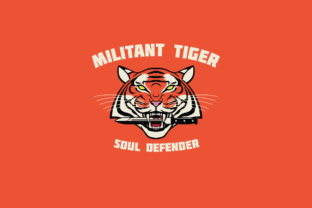
A logo is often the first impression of a brand, and when you need to communicate strength, aggression, and authority, a militant tiger logo template offers a direct visual shortcut. This type of template typically combines the raw power of a tiger with tactical, military-inspired design elements such as combat helmets, crossed weapons, camouflage patterns, shield outlines, or metallic textures. Instead of starting from scratch, you begin with a structured symbol that already conveys a clear message. The challenge lies not in finding the template but in adapting it intelligently into your broader branding and production workflow.
Militant tiger logo templates are vector-based files, often in formats like AI, EPS, SVG, or CDR, designed to be editable in programs such as Adobe Illustrator, CorelDRAW, Inkscape, or Affinity Designer. Some are also available as layered PSD files for Photoshop users or as high-resolution PNG files with transparent backgrounds for quick deployment. Understanding what you are working with before you open the file will save you significant time and prevent compatibility issues later in your process.
Where a Militant Tiger Logo Template Fits in Your Broader Process
A logo template is rarely the final product on its own. It is a starting point, a structural foundation that you modify, refine, and integrate into a larger brand system. In a typical branding workflow, you move from research and concept development into visual design, then into production and deployment. The militant tiger template sits at the transition between concept and visual design. It gives you a strong base symbol so you can focus your creative energy on typography, color palette, layout, and brand guidelines rather than struggling to draw a tiger from scratch.
For a small business owner launching a tactical gear company, an esports team building its identity, a gaming clan forming a visual presence, or a fitness brand emphasizing discipline and intensity, this template reduces the time between idea and launch. It also lowers the barrier to entry for non-designers who need a professional-looking emblem without hiring a graphic designer immediately.
Before the Project: Preparation and Planning
Before you even open the template file, you need clarity on how the logo will be used. Ask yourself: Will this logo appear on a website header, on merchandise, on social media avatars, on vehicle wraps, or on embroidery? Each use case imposes constraints. A highly detailed militant tiger with fine line work may look excellent on a screen but fail when embroidered on a cap. A template with many gradient layers may reproduce poorly in single-color printing.
Preparation also means gathering your brand specifications. Decide on your primary and secondary color palette, your font family for the wordmark, and the overall tone you want to project. If your brand is about discipline and precision, you might choose a clean, geometric version of the template. If your brand is about chaos and aggression, you might retain more distressed or grunge texturing. Having these decisions made beforehand ensures that your edits to the template are purposeful rather than exploratory.
At this stage, it is also wise to organize your file management. Create a dedicated folder for your logo project with subfolders for source files, exports, backups, and reference images. Name your files with version numbers or dates. This habit will save you hours of frustration when you need to revisit an earlier iteration or share files with a collaborator.
During the Project: Customization and Iteration
Once you open the militant tiger logo template in your vector editing software, the real work begins. Start by ungrouping all elements and examining the layers. Most templates are built with separate components: the tiger head, the helmet or headgear, the background shield, the typography, and any decorative accents. Separate these onto distinct layers and label them clearly. This layer organization is critical for efficient editing, especially if you plan to create multiple variations for different applications.
Customize the tiger itself first. Adjust the eye shape, the mouth, the stripe patterns, and the overall silhouette to match your brand's personality. A more stylized, angular tiger conveys a modern tactical feel. A more realistic tiger suggests heritage and raw nature. Change the colors to your brand palette using global swatches so that if you decide to shift a color later, all instances update automatically.
Next, modify the militant elements. Replace a generic helmet with a beret, a tactical headset, or a face mask if that better fits your brand story. Adjust the angle of any crossed weapons or tools behind the tiger. Ensure that the composition remains balanced and that the central symbol remains legible when scaled down to 100 pixels for a favicon or social media avatar.
Typography is where many template users make mistakes. The template may come with a default font, but you should replace it with your chosen brand typeface. If you do not have a custom font, select a clean sans-serif like Montserrat, Oswald, or Bebas Neue for a modern militant look. Avoid decorative fonts that clash with the aggressive tone of the tiger. Kern the letters manually for a polished appearance, and ensure that the text sits in proper alignment with the emblem.
During this phase, work in iterations. Export a low-resolution version, view it on different devices, print it at a small size, and get feedback from a colleague or client. Make adjustments based on legibility and emotional impact. Iteration is not a sign of inefficiency; it is a quality control mechanism that ensures the final logo performs across every medium.
After the Project: Deployment and Consistency
Once your militant tiger logo is finalized, the focus shifts to production and maintenance. Export your logo in multiple formats: SVG for web and vector editing, PNG with transparent background for quick use, JPG for documents, and EPS or AI for printing. For each format, create versions in color, grayscale, and pure black-and-white. The single-color version is essential for situations where color printing is unavailable or expensive, such as receipts, stamps, or certain merchandise.
Create a simple brand guidelines document that captures your logo variations, minimum size requirements, clear space rules, and color codes (HEX, CMYK, RGB, and Pantone). This document is invaluable when you later work with a web developer, a print shop, or a merchandise supplier. It ensures that the militant tiger logo retains its intended appearance regardless of who implements it.
Finally, archive your source files with the final version clearly marked. Include your working files, your exported assets, and your brand guidelines in a single package. Store it in cloud storage and on a local drive. In six months or two years, when you need to create a new variation for a product line or a rebranding effort, you will be grateful that you have a clean, organized source to return to.
How the Template Interacts with Other Tools, Assets, and Decisions
A militant tiger logo template does not exist in a vacuum. It interacts with the entire ecosystem of your brand and your workflow. When you use a design platform like Canva or Placeit, you may be limited in how deeply you can edit the template. These tools are excellent for quick mockups but less suitable for detailed customization. For full control, a vector editing application remains the best environment.
The template also interacts with your brand's color psychology. A tiger in black and deep green with silver accents projects a different message than one in red and gold with black outlines. The militant aesthetic amplifies whatever emotional tone your colors already carry. If your brand is about protection and security, consider blues and charcoal grays. If it is about combat sports or gaming intensity, use reds, oranges, and dark metallics.
Typography decisions interact with the template shape. A wide, bold sans-serif font under a shield-based logo creates a stable, grounded composition. A narrower, all-caps font beside a vertical tiger head creates a more dynamic, asymmetrical layout. Test several font placements before settling on one.
If you work with a team, the template becomes a shared asset. A designer can customize the master file while a marketer uses the exported PNGs for social media. A web developer takes the SVG for the website, and a print specialist uses the EPS for banners. Clear communication about which file version is definitive prevents errors and inconsistencies.
Practical Implementation Tips for Different Users
For a freelancer or solo entrepreneur, time is your scarcest resource. Use the template as a shortcut but invest the saved time in creating those brand guidelines and multiple export formats. This upfront effort pays off every time you need a logo file quickly.
For a small business owner who is not a designer, consider working with the template in Canva or a similar tool first to get a feel for layout and color. Then hire a freelance designer for a few hours to polish the vector file and create the exports. This hybrid workflow gives you creative control without requiring deep software expertise.
For an educator or blogger building a course or channel around tactical topics, a militant tiger logo can become a recognizable personal brand mark. Use it consistently across your thumbnail templates, intro animations, and merchandise. Consistency in placement, color, and sizing builds recognition faster than any single design decision.
For a gaming clan or esports team, the logo will appear in multiple contexts: Twitch overlays, Discord servers, team jerseys, and social media. Create specific variations for each platform. A simplified version without text works best for profile pictures, while a full version with the team name suits banner images.
Quality Control and Long-Term Use
Quality control with a template means verifying that your edits do not introduce visual problems. Check for jagged edges after scaling, ensure that transparency is preserved in PNG exports, and test the logo on both light and dark backgrounds. Print a physical sample if possible. A logo that looks perfect on screen may reveal thin lines or color shifts when printed.
For long-term use, treat your militant tiger logo as a living asset. As your brand evolves, you may want to refine the tiger's expression, update the militant elements, or adjust the color palette. Having a well-organized source file makes these updates quick and consistent. Avoid the temptation to create a new logo from scratch every time you want a refresh. Iterate on the existing design to retain brand equity.
Eventually, you may outgrow the template. That is fine. The template served its purpose: it helped you launch quickly, establish a visual identity, and learn what works for your audience. When you commission a fully custom logo later, you will have a clear brief based on your experience with the template, and the designer will have a solid foundation to build upon.
Final Observations on Process and Integration
A militant tiger logo template is not a shortcut to a great brand, but it is a shortcut to a great starting point. The value comes not from the template itself but from how you adapt it, organize it, and deploy it within your larger workflow. Preparation before you open the file, thoughtful customization as you work, and systematic export and documentation after you finish are what transform a generic template into a distinct brand mark.
Every decision you make with the template, from color choice to typography to file format, ripples outward into every touchpoint your audience encounters. Treat those decisions with the same care you would apply to any other part of your business or creative practice. The militant tiger logo template is a tool. Your process determines whether it becomes a powerful asset or just another file on your hard drive.