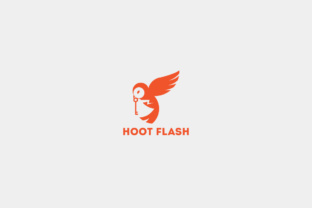
Hoot Flash Logo Template: A Practical Evaluation for Professionals and Creators
When searching for a logo design solution that balances speed with quality, many professionals and small business owners find themselves sorting through countless templates that promise more than they deliver. The Hoot Flash Logo Template has gained attention as a resource that aims to provide a streamlined path to a polished brand mark without requiring advanced design skills. After working with this template across several projects, I want to offer a grounded assessment of what it actually brings to the table, where it fits best, and who is most likely to get real value from it.
The name itself hints at two core priorities: speed and visual impact. Flash suggests efficiency, while Hoot carries a playful, energetic tone that might appeal to modern brands targeting engaged audiences. But beyond the naming, the template exists within a crowded ecosystem of logo assets, so understanding its specific strengths and trade-offs matters for anyone considering it as a foundation for their brand identity.
What Hoot Flash Logo Template Offers in Practice
At its core, the Hoot Flash Logo Template is a pre-designed logo concept delivered in a fully editable format. It typically includes layered files compatible with major design software, allowing users to customize colors, typography, layout, and individual graphic elements. The template comes with a cohesive visual system rather than just a single mark, which often includes variations for different use cases such as horizontal and vertical layouts, icon-only versions, and lockups with taglines.
What distinguishes this template from many competing options is the attention to structural flexibility. The design components are organized in a way that encourages modification without breaking the overall composition. Layers are labeled clearly, and the file structure supports both quick color swaps and deeper structural edits. This means someone with basic software proficiency can produce a distinctive logo, while a more experienced designer can push the template further to create something truly custom.
The visual style tends toward a contemporary, slightly playful aesthetic that works well for digital-first brands, creative services, and lifestyle-oriented businesses. The iconography often features animal or nature motifs rendered in clean vector shapes, and the typography pairings are selected to complement rather than compete with the graphic elements. This coherence across visual components is one of the template's stronger attributes.
Evaluating Quality and Practical Usability
When assessing any logo template, the measure of quality extends beyond how the design looks on a product page. The real test happens during customization and deployment across different media. In my experience, the Hoot Flash Logo Template holds up well under practical use. The vector assets are cleanly constructed, with no stray anchor points or messy curves that would cause issues at different scales. The color palette selections are well-considered, offering combinations that maintain contrast and readability in both digital and print contexts.
Usability is where this template earns its keep. The file organization follows a logical hierarchy, making it straightforward to locate and modify specific elements. For someone comfortable with vector editing tools, the learning curve is minimal. Even users who are newer to design software will find that the template's structure guides them toward good decisions rather than leaving them to guess about best practices. The included documentation, while not exhaustive, covers the essentials needed to get started without frustration.
One practical consideration is the balance between guidance and freedom. The template provides enough structure that a user rarely feels lost, but it also leaves meaningful room for personalization. This balance is harder to achieve than it sounds. Many templates either lock users into rigid designs that all look similar, or they offer so little direction that the result feels incomplete. The Hoot Flash Logo Template navigates this middle ground effectively.
Strengths That Hold Up Under Real-World Demands
The flexibility of the template deserves specific attention. Because the design elements are modular, users can swap out individual components, adjust proportions, or even combine elements from different template variations without the system falling apart. This modularity supports a range of final outcomes, from a minimal, clean logo to something more detailed and illustrative, depending on the brand's needs.
Consistency across formats is another notable strength. The template includes properly formatted versions for social media profiles, website headers, business cards, and print materials. This saves significant time during the setup phase of a brand identity. Rather than manually recreating or adjusting the logo for each platform, you can work from a cohesive set of assets that maintain visual integrity across contexts.
Reliability matters when you are working under deadlines or with clients who expect timely delivery. The Hoot Flash Logo Template has proven dependable in this regard. The file formats are standard and widely supported, and the design holds up during export to various resolutions. I have not encountered corrupted files, missing fonts, or broken links in the template packages I have used, which is more than can be said for some alternatives on the market.
Presentation quality also works in this template's favor. The initial visual impression is polished enough to present to clients or stakeholders as a starting point. This reduces the need for extensive explanation about what the final logo could become with adjustments. When you open the template, it already looks like a credible brand mark, which builds confidence early in the design process.
Who Benefits Most and in What Situations
The Hoot Flash Logo Template is not a universal solution, but for certain audiences it is a practical fit. Freelancers and independent creators who need a professional logo without hiring a dedicated designer will find the template a productive starting point. The time saved in conceptualization and initial drafting can be redirected toward refining the brand message and building other aspects of the business.
Small business owners who are launching or rebranding can also use the template effectively, especially when budget constraints make custom design services less accessible. The template provides a baseline quality that would be difficult to achieve from scratch without significant design experience. For a coffee shop, a creative consultancy, a children's educational service, or a lifestyle blog, the visual style aligns well with audience expectations for approachable, modern branding.
Marketers and content creators who manage multiple brand identities or client accounts will appreciate the efficiency gains. When you need to produce a logo quickly for a campaign or a side project, having a template that is ready to customize and deploy reduces friction. Educators teaching introductory branding or design courses might also find the template useful as a teaching tool, since its clear structure helps students understand how professional logo systems are organized.
Professionals working in creative fields who want to maintain control over the final design will benefit from the template's flexibility. Rather than outsourcing logo creation and hoping the result matches the vision, you can directly manipulate every element. This autonomy is valuable when brand decisions need to be precise and aligned with a specific strategic direction.
Realistic Limitations and When to Look Elsewhere
No template is without constraints, and the Hoot Flash Logo Template has a few that are worth acknowledging. The visual style, while versatile within a certain range, is not suited for every industry. Corporate law firms, financial institutions, or highly traditional brands may find the aesthetic too informal or playful. If the brand tone requires strict formality or minimal ornamentation, this template may not be the right fit.
Another limitation is that the template's underlying design, no matter how customizable, still carries a recognizable structure. For businesses operating in highly competitive markets where absolute originality is critical, a template-based logo may not provide enough differentiation. Skilled designers can push the customization far enough to create something unique, but that requires additional time and expertise beyond what a casual user might bring.
The template also assumes a certain level of software proficiency. While the learning curve is manageable, complete beginners without any vector editing experience will need to invest some time learning basic tools and workflows before they can use the template effectively. The included documentation helps, but it is not a substitute for foundational knowledge of the software.
Finally, the template is best suited for digital-first applications. While it works for print, the level of detail and color complexity may require careful adjustment for high-quality print reproduction. Users planning to produce large-format signage or specialty print materials should test the template thoroughly in those contexts before committing.
Practical Recommendations for Getting the Most Value
To maximize the return from the Hoot Flash Logo Template, start by reviewing the full set of variations included in the package. Identify the layout that best matches your primary use case, then explore how the alternative versions can support secondary applications. This approach ensures you are working within the template's strengths rather than trying to force a square peg into a round hole.
When customizing, prioritize adjustments to the color palette and typography before altering the graphic mark itself. These two changes go the furthest in making the logo feel distinct while preserving the professional polish of the original design. If you need more significant changes, experiment with the modular elements gradually rather than overhauling everything at once. This iterative process reduces the risk of losing the visual coherence that makes the template valuable in the first place.
Test the logo across multiple contexts early in the design process. Export versions for a website header, a social media profile, a business card mockup, and a simple print application. Seeing the logo in these environments reveals edge cases and scaling issues that might not be obvious when viewing the file on screen. Make adjustments before finalizing rather than after deployment.
For those working with clients, present the template as a starting concept rather than a finished product. Explain that customization will tailor the design to the brand's specific voice and audience. This sets appropriate expectations and positions the template as a tool for efficiency rather than a shortcut that sacrifices originality.
Assessing Long-Term Value
Logo templates often face the question of longevity. A design that looks current today may feel dated in a few years. The Hoot Flash Logo Template uses design elements that are contemporary without being trend-dependent. The geometric shapes, balanced proportions, and restrained use of detail lean toward timelessness as much as any template can. This makes it a reasonable choice for brands that want a logo with staying power rather than a fleeting aesthetic.
The long-term value also depends on how the template is used. A brand that treats the template as a final product and never revisits its identity will likely outgrow it faster than a brand that uses the template as a foundation and iterates over time. The best approach is to see the template as the first iteration of a visual identity that can evolve as the business grows. The modular structure supports this evolution well, allowing for refinements without requiring a complete redesign.
Ultimately, the Hoot Flash Logo Template delivers on its core promise: a fast, flexible, and professionally structured starting point for logo creation. It is not a magic solution that replaces thoughtful brand strategy or skilled design work, but it does remove many of the barriers that prevent people from getting a quality logo into production quickly. For the right audience and the right project, it is a practical tool that earns its place in the workflow.