Deco Neue Wilde: Why This Design Hybrid Is Reshaping Creative Workflows and Brand Strategy
In the ever-evolving landscape of visual communication, few developments have captured the attention of designers, marketers, and business strategists quite like the emergence of Deco Neue Wilde. This distinctive design language, which fuses the geometric precision of Art Deco with the raw, expressive energy of the Neue Wilde movement, is more than just a stylistic novelty. It represents a fundamental shift in how professionals across industries approach aesthetic storytelling, brand identity, and user experience.
To understand why Deco Neue Wilde has become a focal point for creators and entrepreneurs alike, it is necessary to examine the cultural and technological currents that have converged to make this hybrid style not only viable but essential. This article explores the practical implications, market relevance, and workflow transformations that accompany this trend, offering actionable insights for those looking to stay ahead in a crowded digital and physical marketplace.
What Exactly Is Deco Neue Wilde?
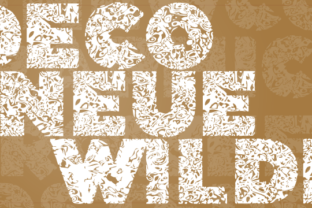
At its core, Deco Neue Wilde is a design synthesis that borrows the symmetrical, ornate, and luxurious geometries of 1920s Art Deco and marries them with the gestural, improvisational, and often chaotic brushwork of the Neue Wilde painting movement that emerged in late 20th-century Germany. The result is a visual vocabulary that feels both rigorously structured and spontaneously alive.
Unlike purely retro revivals, Deco Neue Wilde does not simply replicate historical forms. It reinterprets them through a contemporary lens, leveraging digital tools to achieve a level of texture, layering, and unpredictability that was previously difficult to produce at scale. The style often features bold, metallic color palettes combined with rough, apparently hand-drawn elements, creating a tension between control and freedom that resonates deeply with modern audiences.
For professionals working in branding, this duality offers a powerful tool. The Deco component conveys stability, heritage, and premium quality, while the Neue Wilde influence introduces humanity, spontaneity, and emotional depth. In an era when consumers are increasingly skeptical of overly polished corporate aesthetics, this balance becomes a strategic asset.
The Broader Market and Cultural Context
The rise of Deco Neue Wilde cannot be understood in isolation. It is part of a larger cultural push toward authenticity and tactile richness in a digital-first world. Over the past five years, the creative industry has witnessed a pendulum swing from the minimalist, flat-design paradigms that dominated the 2010s toward more expressive, maximalist, and texturally complex visual languages.
Several factors have contributed to this shift:
- Digital fatigue: Audiences have grown weary of sterile, hyper-optimized interfaces. The rough edges and visible hand of the artist in Neue Wilde elements offer relief from the impersonal perfection of algorithm-driven design.
- Premiumization of experience: As brands compete for attention, the need to signal quality and exclusivity has intensified. The Art Deco component of Deco Neue Wilde evokes a sense of craftsmanship and luxury that appeals to discerning consumers.
- Generational preferences: Millennial and Gen Z creators, many of whom came of age during the resurgence of artisan culture and the maker movement, are drawn to styles that celebrate process and imperfection.
In this context, Deco Neue Wilde occupies a unique position. It satisfies the desire for nostalgia without being derivative, and it embraces complexity without sacrificing legibility. For marketers, this translates into visual assets that stand out in saturated feeds while still communicating a clear brand message.
Why the Creative Community Is Paying Attention
Professionals across disciplines are gravitating toward Deco Neue Wilde for reasons that extend beyond aesthetics. The style aligns with several practical and philosophical shifts in how creative work is produced and consumed.
Democratization of Expression
One of the most compelling aspects of the Neue Wilde movement was its rejection of institutional gatekeeping. Similarly, Deco Neue Wilde lends itself to a wide range of skill levels. Freelancers and small studios can experiment with the style using accessible tools like iPad drawing apps, vector software with brush engines, and even collage techniques. This democratization lowers the barrier to entry for independent creators who want to produce work that feels both polished and personal.
Differentiation in a Homogeneous Market
Entrepreneurs and marketers are constantly searching for ways to break through the noise. The hybrid nature of Deco Neue Wilde allows brands to occupy a visual niche that is neither strictly vintage nor aggressively modern. This ambiguity can be strategically valuable, enabling businesses to appeal to multiple demographics simultaneously without diluting their identity.
Adaptability Across Media
From packaging and print to web design and motion graphics, Deco Neue Wilde translates effectively across media. The structural clarity of the Deco elements ensures readability and hierarchy in digital interfaces, while the expressive qualities of the Neue Wilde components create dynamic, engaging content for social media and video. This versatility makes it an efficient choice for teams that need to maintain visual consistency across diverse touchpoints.
Changing Needs, Preferences, and Workflows
The adoption of Deco Neue Wilde reflects deeper changes in how professionals approach their work. These shifts are worth examining, as they point to broader trends that will continue to shape the industry.
From Perfection to Personality
For years, the prevailing wisdom in graphic design emphasized crisp vectors, perfect alignment, and seamless gradients. The growing preference for Deco Neue Wilde signals a move away from this pursuit of mechanical perfection. Clients and audiences increasingly value personality, narrative, and the visible evidence of human effort. This does not mean abandoning precision, but rather integrating it with spontaneity. Workflows that once focused exclusively on refinement now include stages of intentional disruption, where designers introduce hand-drawn overlays, distressed textures, or asymmetrical compositions to inject life into their work.
Collaborative and Iterative Processes
The hybrid nature of Deco Neue Wilde encourages a more collaborative approach between designers, illustrators, and art directors. Because the style combines architectural elements with fine art techniques, it often requires multiple specialists to contribute their expertise. This has led to new workflow patterns where digital asset creation is followed by analog embellishment and then back into digital finishing. Teams that adopt this style find themselves rethinking their production pipelines, often integrating tools like high-resolution scanning, tablet drawing, and 3D modeling to achieve the desired depth.
Client Expectations and Education
As with any emerging style, the adoption of Deco Neue Wilde involves a degree of client education. Marketers and freelancers who champion this approach must articulate its strategic value beyond mere ornamentation. Successful practitioners frame the style in terms of brand resonance, audience engagement, and competitive differentiation. This requires a shift in how creative professionals communicate their work, moving from purely aesthetic justifications to evidence-based arguments about attention retention and emotional connection.
Practical Examples and Observations
To ground these observations, it is useful to consider how Deco Neue Wilde manifests in real-world applications. Early adopters across several sectors are already demonstrating its potential.
In the hospitality industry, boutique hotels and cocktail bars are using the style to craft identities that feel both glamorous and intimate. A typical application might involve a Deco-inspired typeface paired with Neue Wilde–inspired murals on the walls and menu covers. The result is an environment that communicates sophistication without coldness, inviting guests to experience a space that is curated yet lively.
In digital product design, some fintech and lifestyle apps have begun incorporating Deco Neue Wilde elements into their onboarding screens, illustrations, and promotional materials. By using the style's geometric frames and textured accents, these brands convey a sense of security and heritage in an industry often accused of being faceless. The hand-drawn elements add a layer of approachability that helps demystify complex services.
For independent publishers and media companies, the style offers a way to stand out on newsstands and in digital feeds. Magazine covers and feature layouts that combine Deco’s symmetrical elegance with Neue Wilde’s vibrant brushstrokes create a strong visual signature that readers remember. This is especially valuable in an era when attention is the scarcest resource.
Connecting to Larger Developments
The rise of Deco Neue Wilde is symptomatic of a broader cultural and economic moment. Several large-scale developments make the style particularly resonant.
The hybrid work economy has blurred the lines between professional and personal expression. Creatives and entrepreneurs who operate in this environment often need their visual output to reflect multiple facets of identity: competence and creativity, tradition and innovation. Deco Neue Wilde accommodates this complexity by embodying both discipline and freedom within the same frame.
Sustainability and slower production cycles are also relevant. The style's emphasis on craftsmanship and visible process aligns with a growing preference for goods and experiences that feel made, not mass-produced. Brands that adopt Deco Neue Wilde can tap into this sentiment without necessarily overhauling their production methods; the visual language itself communicates care and attention to detail.
The global interest in cultural fusion likewise plays a role. Just as contemporary music, cuisine, and fashion increasingly draw from multiple traditions, design is moving toward hybridity. Deco Neue Wilde exemplifies this trend by synthesizing two distinct historical movements into something that feels entirely current. It suggests that the most forward-looking creative strategies are not those that invent from scratch, but those that assemble existing parts into new, meaningful configurations.
Looking Ahead Without Speculation
What is clear from the current trajectory is that Deco Neue Wilde is not a fleeting whim. Its principles address enduring human needs for beauty, meaning, and connection. For professionals who work in visual communication, understanding this style is not about mastering a specific set of visual tricks; it is about grasping a new way of thinking about composition, brand voice, and audience psychology.
As the tools for creating hybrid digital-analog work continue to improve, the barriers to experimenting with Deco Neue Wilde will only decrease. For marketers and entrepreneurs, this means the window of differentiation is open now. For freelancers and enthusiasts, it offers an opportunity to develop a distinctive portfolio that stands apart from the mass of generic design work.
Ultimately, the relevance of Deco Neue Wilde lies in its ability to speak to a moment of transition. It acknowledges a desire for order and luxury while celebrating the messiness of human creativity. In a world that often feels polarized between rigid structure and chaotic freedom, this middle ground is not just aesthetically pleasing; it is strategically wise. The professionals who recognize this and adapt their workflows accordingly will find themselves well positioned to meet the evolving expectations of their audiences.